The scientist turning fear into cure
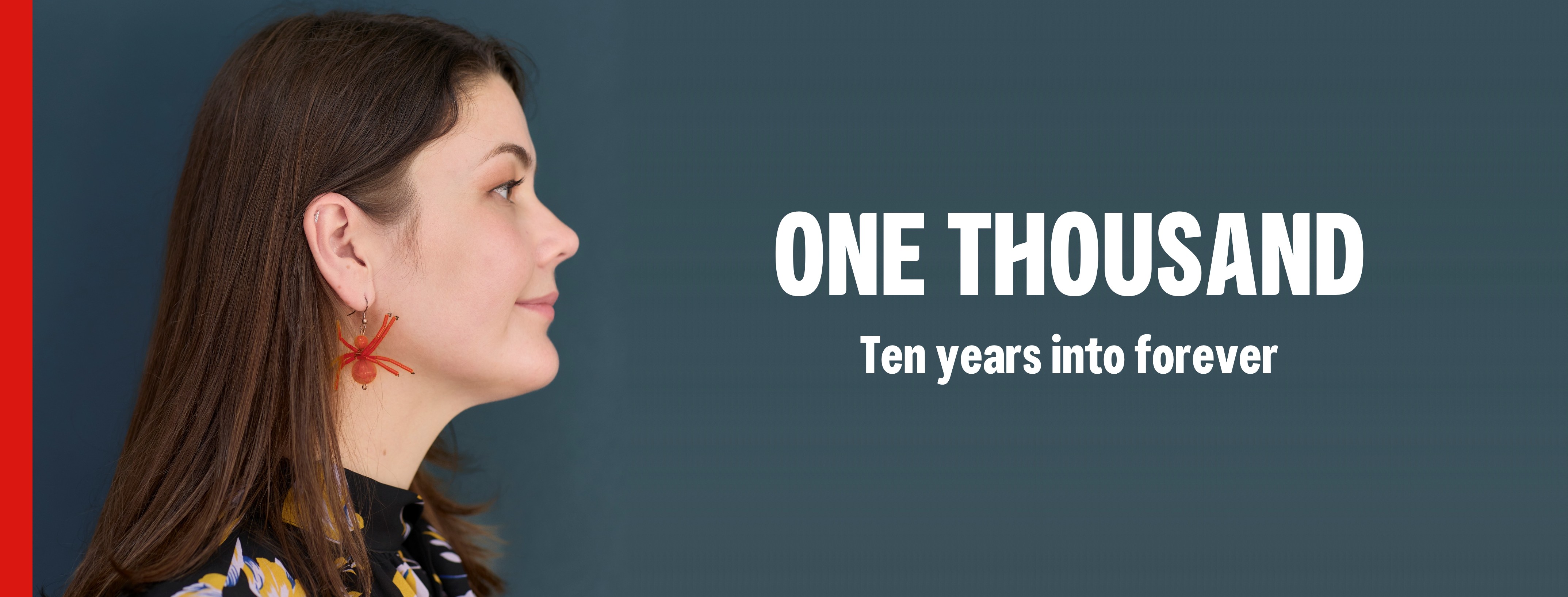
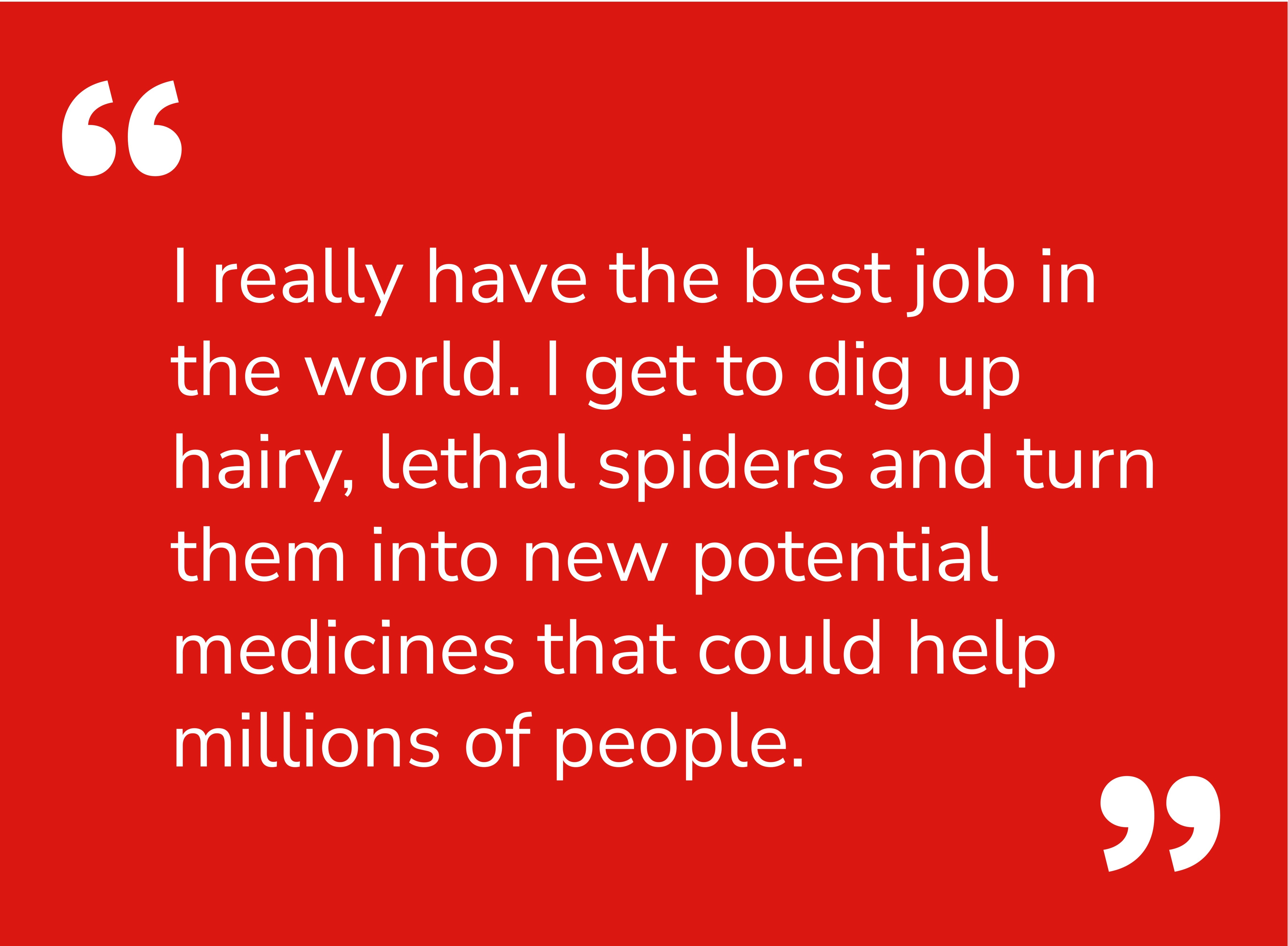
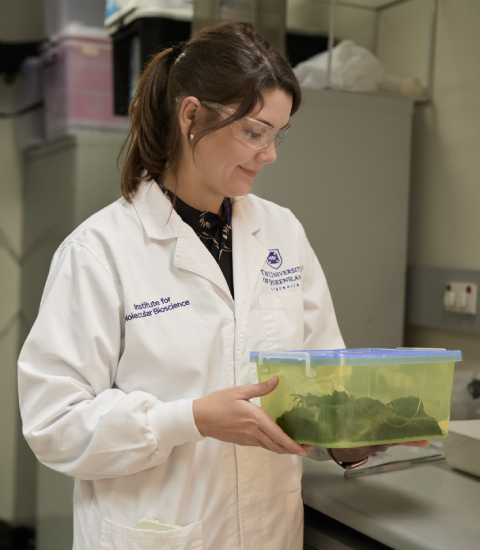
Dr. Samantha Nixon was once terrified of spiders. Now she’s mining their venom for the molecules that might cure diseases affecting over 1.6 billion people worldwide.
‘If an orb-weaver crossed my path, I would double back and cry,’ Samantha recalls. ‘That was it. Day over.’ Samantha was a certified arachnophobe. Then she discovered that spiders have the most complex venoms of any venomous animal, and hidden within that chemistry might be molecules capable of shutting down chronic pain.
So she did what most arachnophobes could never imagine: she volunteered in a spider lab. She looked after them. She named them. Beyonce the tarantula was instrumental in helping her overcome her fear. What started as exposure therapy became something else entirely: a career built on the premise that our deepest fears might hold unexpected answers.
Most venom researchers were focusing on chronic pain, epilepsy or developing insecticides. Samantha chose a different path. She made parasitic diseases her focus. The rationale was elegant: spiders are the world’s greatest insect hunters and there’s significant drug target overlap between insects and parasitic worms. Maybe the venoms killing insects could also kill the worms.
Many advised against it. But Samantha was adamant. ‘You have to go against what everyone else is doing,’ she says now. ‘That’s where you’re going to find the new discoveries.’ And it worked. Her PhD research identified molecules that could kill parasitic worms devastating the Australian sheep industry, work that would later expand to human parasites causing neglected tropical diseases.
‘It was a wonderful moment,’ she says, ‘to go from being so afraid of these spiders to realising that actually they’re the good bugs helping us fight the bad bugs, the blood-sucking worms that are actually the real threat.’
The stakes are considerable. A WHO report highlights that in 2022, 1.62 billion people required interventions against neglected tropical diseases (neglected as they are almost absent from the global health agenda, unlike diseases such as HIV or malaria). While these conditions cause 120,000 deaths annually, and cost developing communities billions of dollars in health costs and lost productivity, they remain persistently under-resourced and under-researched.
Closer to home, the problem is equally urgent. Barber’s Pole Worms, highly dangerous parasites living in the digestive tracts of sheep, cost the Australian sheep industry upwards of $450 million a year, according to the NSW Government. Add parasitic flies and the figure climbs by another $400 million.
The problem is that these parasites have become resistant to all available classes of drugs and limiting what farmers can do to protect their sheep. It’s a significant animal welfare issue and an economic burden threatening the sustainability of the industry.
‘Australia is a relatively small market from the perspective of pharmaceutical companies,’ Samantha explains. ‘So this problem doesn’t attract the pharmaceutical investment it warrants.’ Drug-resistant parasitic worms don’t just affect sheep. New reports indicate that they are spreading in our pets and threatening human health. With one in four people still infected with parasitic worms, the urgency for novel drug sources has never been greater. Spider venoms might be the overlooked pathway needed to find new treatments.
Sam’s fieldwork has taken her to some of the most remote and precious places on Earth: the Amazon, Antarctica and the Australian Outback.
In these places, she’s struck by something fundamental. ‘People and ecosystems depend on each other,’ she says. ‘It’s a reciprocal relationship. Spiders might hold the cure to a disease, but if we destroy their habitats, we lose access to those cures. ‘Nature is helping us,’ she says, ‘but we also need to help nature.’
Her favourite spiders, if she had to choose, are the Australian funnel web. Specifically, the K’gari funnel web, a large species sometimes called the long-tooth spider for its exceptionally long fangs. ‘Even though they have this reputation of being the world’s deadliest spider, they’re actually quite sweet,’ she says. ‘They’re not aggressive, they’re defensive. They spend most of their time just hanging out in their burrow, and if they hear something big coming, they actually retreat.’
For Samantha, the day-to-day work is sustained by something else: mentoring the next generation. She’s now spoken to more than 1,500 students, particularly in schools outside metropolitan areas. It’s a question of visibility. Globally, UNESCO reports women make up just 33.3 per cent of researchers and only 35 per cent of STEM graduates. Changing that begins with showing young people what a scientist actually looks like and why the work matters.
She reflects: ‘I really have the best job in the world. I get to dig up hairy, lethal spiders and turn them into new potential medicines that could help millions of people.’
Backed by Westpac Scholars Trust
The Westpac Future Leaders Scholarship enabled Samantha to expand her research internationally, establishing collaborations to test spider venoms against human parasites like schistosomiasis, which affects over 600,000 people annually, and lymphatic filariasis, which puts 65 million at risk. She spent time in a US pharmaceutical company learning drug development pathways and conducted fieldwork in the Amazon. The fellowship’s leadership program taught her that leadership is about inspiring a vision and supporting people on the journey. But perhaps the most enduring impact has been the community of scholars: a network she can call on for mentorship, peer support and real-world translation of research.
One Thousand Magazine
Step inside One Thousand and explore more stories behind the milestone.