The chemist making the invisible visible
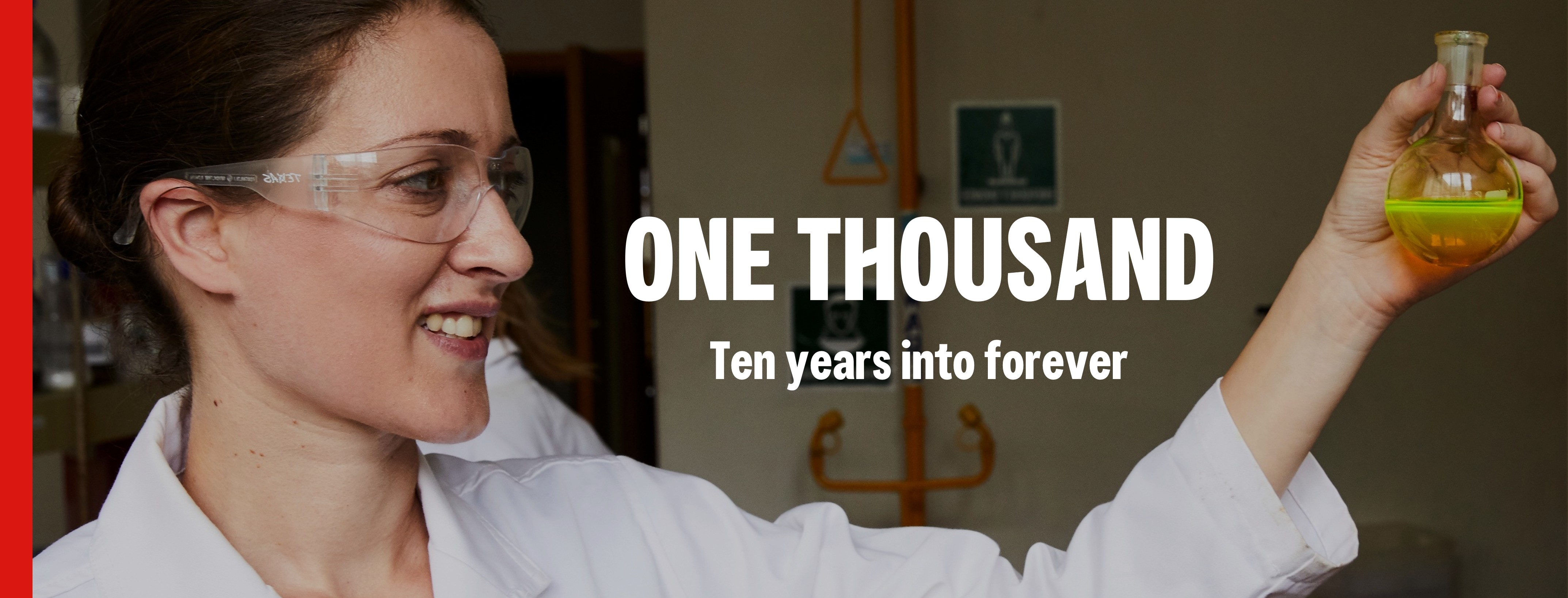
Professor Elizabeth New OAM is building tools that make the invisible visible. By creating the sensors that allow other researchers to see inside cells, her work measures what was once unmeasurable and responds to questions that have long gone unanswered.
Fluorescent sensors are molecular tools that allow scientists to see inside living cells, tracking how cells respond to stress and whether a treatment is working. But Elizabeth’s own research from 2016 identified that less than 1 per cent of sensors developed for medical research are ever applied beyond the original study for which they were created.
Generally, a researcher designs a new tool, publishes the findings, and then the sensor is never used again. For Elizabeth, a professor at the University of Sydney, this represented a fundamental misalignment between research effort and research impact.
It forced a reckoning. ‘If I want to be a scientist and a researcher, what is the meaning that I want to get from it?’ The answer wasn’t more awards, papers or recognition. It was work that would be genuinely used to answer questions that mattered.
Elizabeth’s response has been to build tools with a different purpose: sensors designed to be used, shared and integrated into the work of others. It meant starting not in the lab, but with the people who would use them.
Along with her team, she began designing chemical sensors that allow scientists to look inside living cells and watch what was happening at a molecular level. One focus was oxidative stress, a natural process that accompanies aging but is also associated with many diseases. The team developed a platform for sensing oxidative stress in cells over time, tracking whether cells could recover or were irreversibly damaged.
A bioreagents company eventually licensed the technology and added the sensors to their catalogue, but the real validation came from the research community itself. Emails from researchers asking to collaborate. Papers applying the tools to Alzheimer’s research, Parkinson’s, cancer and bacterial infections. ‘It shows that our sensors are a useful tool,’ Elizabeth says. ‘They’ve enabled other people to study these diseases.’
More recently, her focus has shifted toward clinical diagnostics, including measuring chemotherapy drugs in the blood. In Australian hospitals, if you receive intravenous antibiotics, clinicians will routinely measure the drug level to ensure it’s not too high or too low. But for chemotherapy, that’s not standard practice. A hospital-based study reported around 46 per cent of patients undergoing treatment receive a platinum-based drug at some stage.
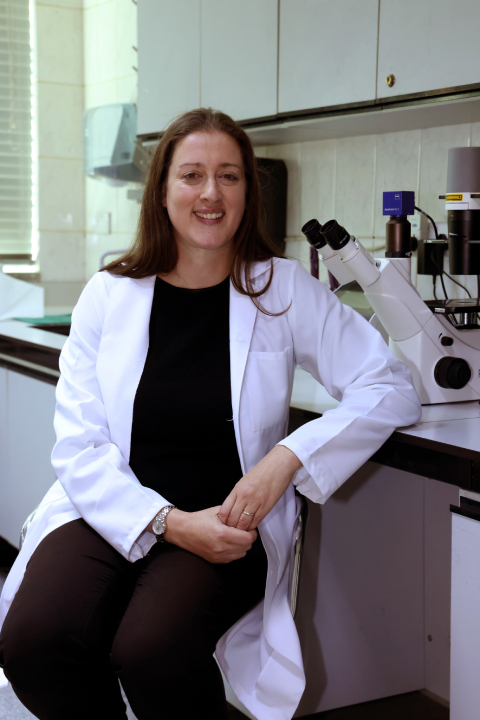
Approximately three-quarters of those patients need a dose reduction after the first round because the side effects are so severe: hearing loss, nerve damage, nausea. The toxicity is predictable yet the dosing is still blunt.
Elizabeth’s team spent eight years developing a method to measure platinum drugs in blood with precision. The breakthrough didn’t come from the chemotherapy project itself. It came from a Westpac Scholars Trust supported project on environmental sensing, the process of detecting and measuring chemical changes in natural environments, which unlocked the foundational science they needed: machine learning and complex data analysis that opened up an entirely new field of research. Five groups in Australia are now working in this space, all stemming from her work. Some are former students. Others sought her help to develop their own tools.
The work moved toward commercialisation when a Master of Business Administration program selected the project for their students to investigate its potential. One student, Alex, saw the promise. Elizabeth hired him to do business development, which led to venture capital funding, the creation of a startup, and Alex coming on board as general manager. ‘You need to share the same vision,’ Elizabeth reflects, ‘even though you come with different expertise.’
Elizabeth is currently on sabbatical in Jordan, consulting for SESAME (Synchrotron-light for Experimental Science and Applications in the Middle East), the only synchrotron (a large-scale research facility that uses powerful beams of light to study materials at the molecular level) in the Middle East and North Africa region. It serves as a multinational scientific resource for researchers across the region and plays an important role in ‘Science for Peace’ initiatives.
The experience has shifted her thinking. Training researchers from the Global South, she now understands, isn’t about teaching them to use the most advanced microscopes.
It’s about equipping them to be scientific leaders and communicators where they live, with the resources they have.
‘We cannot be selfish as scientists,’ she says. It’s a principle she’s carried from the people who championed her: mentors who put her name forward, gave up opportunities to give her a chance, supported her when she was still unproven.
The proof of her approach is now visible across the field. In laboratories across Australia and beyond, researchers are using Elizabeth’s sensors to answer questions she never anticipated. It has been 10 years since her team first published their oxidative stress sensors, and they are now being applied by researchers in ways that reveal new dimensions of disease. The platinum diagnostic platform is moving closer to clinical reality. Former students are building their own research programs, extending the field she helped establish.
This is the compound effect of building well: not a single breakthrough moment, but a steady accumulation of capacity, knowledge and possibility.
Backed by Westpac Scholars Trust
The Westpac Research Fellowship gave Elizabeth the time to undertake commercialisation training, which became a pivot point in how she approached research and impact. Beyond funding, the program empowered scholars to practice leadership: speaking on panels, organising events, learning from business leaders outside academia how to engage, connect and lead with intention.

One Thousand Magazine
Step inside One Thousand and explore more stories behind the milestone.