Rewriting the rules of resilience

By refusing to accept that rising temperatures mean the end of our coral reefs, Dr Wing Yan Chan is rewriting the fundamentals of reef restoration.
In the 1800s, Tolo Harbour in Hong Kong once thrived with coral, its waters home to sprawling reef systems that covered 80 per cent of the seabed.
By the time Wing, a Senior Research Fellow at the University of Melbourne, was reading about Tolo Harbour as a teenager, urban development and pollution had reduced coverage to less than 2 per cent. ‘I didn’t even know there was a coral reef,’ she says now. ‘There’s something really missing in our education. The young generation have the right to know what was there.’
Under current Intergovernmental Panel on Climate Change (IPCC) projections, coral reefs face a 70 to 90 per cent decline at 1.5°C of warming. That figure jumps to over 99 per cent at 2°C. The Australian Institute of Marine Science reports that coral loss from the 2024 bleaching event in the northern and southern Great Barrier Reef was the biggest decline in a single year since monitoring began ~40 years ago.
Traditionally, the dominant conservation approach has involved planting coral fragments back into degraded reefs, like seedlings in a garden. The assumption was that the corals would go on to thrive in a familiar environment. But the environment is no longer stable; it’s only getting warmer.
Wing’s research asks: how do we plant coral to give it the highest chance of survival in this new environment?
Her answer lies in assisted evolution, a concept that builds on natural adaptation. It works to identify heat-tolerant genes and find the symbiotic partners that will help the coral survive in warmer water. When Wing began her PhD in 2015, the idea was controversial. The traditional conservation model emphasised local adaptation, the principle that species in a particular place are best suited to that environment. But Wing and her PhD supervisor asked: what happens when the local environment no longer resembles its origins?
Wing’s review paper faced significant pushback. But over time, the field began to shift. What was once seen as radical is now increasingly recognised as necessary. ‘It’s fantastic to see that change,’ she says.
Her current work focuses on the symbiotic relationship between coral and the microalgae that live inside them. By boosting the heat tolerance of these algae and reintroducing them to coral, her team is creating more resilient partnerships. The process is painstaking: cultivate the algae, test resilience, transfer them to coral, test again in the lab across multiple species. Only then does the work move to the field.
Wing doesn’t have neat solutions to climate issues that are environmental, political and social.
But she does believe the power to enact change doesn’t solely rest with governments or institutions. ‘We underestimate the collective power from individuals and the daily choices that we make,’ she says. Citizen scientists in South Australia tracking algal blooms. Tourism operators monitoring reef health. Local communities who notice when something’s wrong and report it. ‘It’s the little kinds of care and fire, the spark in your heart, that really translates into action.’
Her own research wouldn’t be possible without those relationships. For her Westpac project, she sought and received consent from the Traditional Owners of Manbarra Sea Country, where she collects coral. ‘It was the right thing to do,’ she says.
Looking ahead, she sees a future where Traditional Owners and local communities aren’t add-ons to conservation projects but foundational partners. Where scientists and governments are open to new approaches that have been rigorously tested and are ready to deploy when needed. Where nature education isn’t exceptional, it’s expected.
Wing believes Australia is uniquely positioned to lead that shift. The country is a global leader in coral reef research and restoration technology. That leadership is both a domestic and regional responsibility. Small Pacific nations are experiencing some of the most severe consequences of climate change, despite contributing the least to carbon emissions. Wing sees Australia’s role as one of knowledge transfer, not imposition. ‘Being able to bring out those ideas and support Pacific nations, understanding their unique environment and then having our kind of two-way knowledge transfer.’
She is a naturally optimistic person. But optimism, in her work, isn’t the same as denial. She has seen reefs bleach in real time. She has felt the emotional toll on young researchers witnessing it for the first time. ‘I can tell you about so many heart‑breaking moments,’ she says.
What keeps her going is focus. Not on what’s broken, but on what can be built. ‘I choose to focus on what I can do within my ability. You might be one person,’ she says, ‘but with your lab, your team, your community, you can definitely make a difference.’
Backed by Westpac Scholars Trust
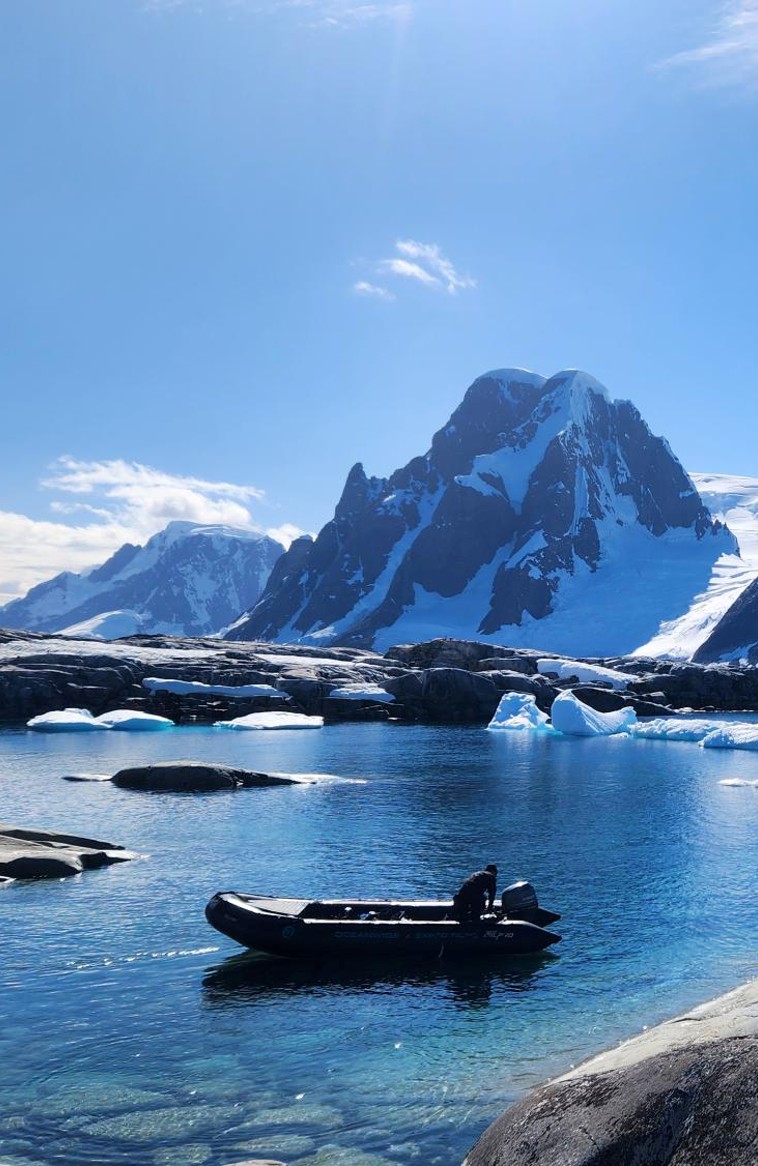
The Westpac Research Fellowship gave Wing the space to become the scientist she wanted to be. Through salary support for a new postdoc and PhD student, plus funding for fieldwork and partnerships, the fellowship enabled her to contribute to marine science policy, support citizen science in Antarctica, build collaborations across Hong Kong and Taiwan, and mentor the next generation.
One Thousand Magazine
Step inside One Thousand and explore more stories behind the milestone.