Reframing the narrative
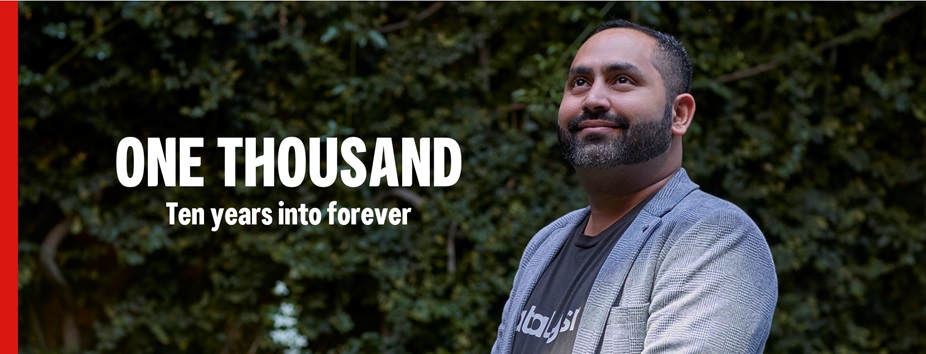
Usman Iftikhar is rethinking how Australia mobilises the skills of its migrant workforce. By creating practical pathways and reframing the narrative, underutilisation is seen for what it is: a systemic gap, not an individual failure.
For Usman, who emigrated from Pakistan to Australia in 2013, this isn’t an abstract issue. Despite having a master’s degree in engineering management, he’d found himself stocking shelves at a service station at 3am. He’d applied for more than 1,000 jobs at this point.
‘I was really understimulated and underutilised,’ Usman recalls. ‘Eventually I thought, if people won’t give me a job, I’m going to start my own business.’
His experience wasn’t unique. There’s plenty of familiar rhetoric about the skills shortages impacting Australian industries, from construction to healthcare. The solutions almost always focus on attracting offshore workers to fill the gaps.
Yet a significant portion of Australia’s current migrant talent is unseen, underused or locked out entirely. In the 12 months to February 2025, a Jobs and Skills Australia report puts the unemployment rate for people born in North Africa and the Middle East at 6.8 per cent, while for those born in North-West Europe it was 2.9 per cent.
Usman’s frustration became the foundation for Catalysr, Australia’s leading startup incubator for migrant and refugee entrepreneurs. But Catalysr didn’t emerge from a business plan. It came from a mentor’s challenge after Usman’s clean tech startup failed. The brief was simple: solve a real problem you’ve faced, not just another app or tech solution.
‘Up until this point I’d been thinking it was just me,’ Usman says. ‘But when I looked at the data, I realised that a large majority of Australia’s migrant population are facing these challenges.’
From the beginning, Usman made deliberate choices about what Catalysr would not be. It wouldn’t try to be everything to everyone. And most importantly, it wouldn’t charge commercial rates, because that would exclude the very people it was designed to serve. After a few years of experimentation, Catalysr found its niche: tech and social impact ventures, spaces where no one else was focusing on migrant and refugee founders.
To sustain the model, Usman set up a hybrid structure: a foundation running free programs funded by philanthropy and grants, alongside a separate proprietary entity generating revenue through fee-for-service work with councils and universities.
The results speak for themselves. Catalysr has now supported over 1,200 people from 87 countries and helped launch more than 300 businesses. Forty-eight per cent of participants have been women, a target Usman and his team worked hard to achieve. The stories that emerge from the programs reveal not just individual wins, but systemic gaps finally being addressed.
There’s the founder who started a social enterprise sourcing coffee beans directly from African farmers to Australian cafés. There’s the moving company that offers free services to people facing domestic violence. Then there’s the tech startup that, following rejections from multiple potential partners, has since launched its satellites into space.
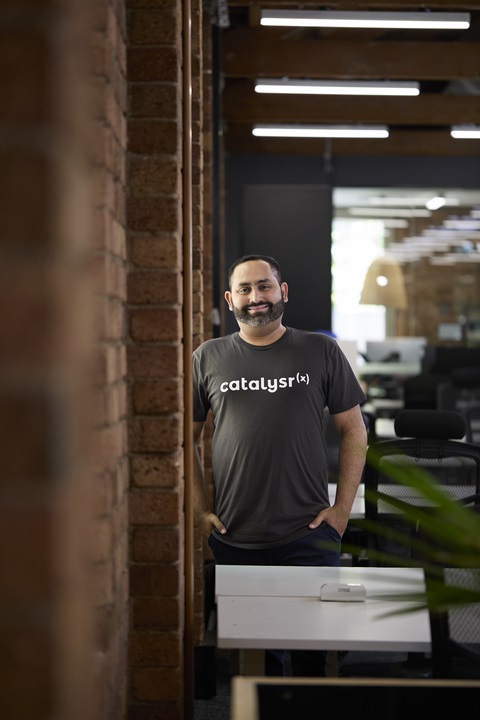
‘We’re a bit of a triage nurse,’ Usman says. ‘People don’t know where to go or what to do. We help point them in the right direction.’
But the work isn’t without tension. Power imbalances are everywhere: between investors and founders, mentors and entrepreneurs, established Australians and newly arrived migrants. Usman has learned to navigate this carefully. Catalysr trains founders to understand they have agency; they can say no to advice, to funding, to partnerships that don’t serve them. At the same time, the organisation works with mentors and investors to help them recognise the weight their words carry, especially for people from cultures where deference to authority is deeply ingrained.
‘In many cultures, if a mentor tells you something, you take it as gospel,’ Usman explains. ‘We need to train both sides.’
The CGU Migrant Small Business report highlights one-third of Australian small businesses are migrant-owned, and more than 1.4 million Australians work for migrant employers. Forty per cent of Australian tech founders are born overseas. Yet the narrative hasn’t caught up. Migrants are still framed as taking jobs, not creating them. Usman sees entrepreneurship as a way to cut through the division that has seeped into much of our public discourse.
‘The average person really wants to help make the community better,’ Usman says. ‘We just need to create the right systems and the right incentives.’
‘In the next 20, 30, 50 years, we’re going to see a lot more migration due to climate change,’ he says. ‘We’re not prepared for that. We need systems and mechanisms in place now, while supporting the local populations that will absorb those people. How do we not repeat the mistakes we’ve made so far?’
It’s a question that shapes how he thinks about the coming decades, the next generation of founders and the infrastructure Australia desperately needs. Not just for today’s gaps, but for the ones still forming on the horizon.
Backed by Westpac Scholars Trust
The Westpac Social Change Fellowship gave Usman the resources and network to think globally about migrant entrepreneurship. It enabled him to attend Stanford, connect with organisations across the UK, Canada, Ethiopia and Kenya, and understand that migrant underemployment isn’t just an Australian challenge. The fellowship also provided coaching support that helped him scale Catalysr nationally, particularly valuable when the pandemic hit and the organisation needed to rapidly shift from in-person programming to online delivery. Through the broader Westpac network, Usman accessed board skills audits and governance support, strengthening Catalysr’s infrastructure for long-term impact.

One Thousand Magazine
Step inside One Thousand and explore more stories behind the milestone.