Learning to live with fire
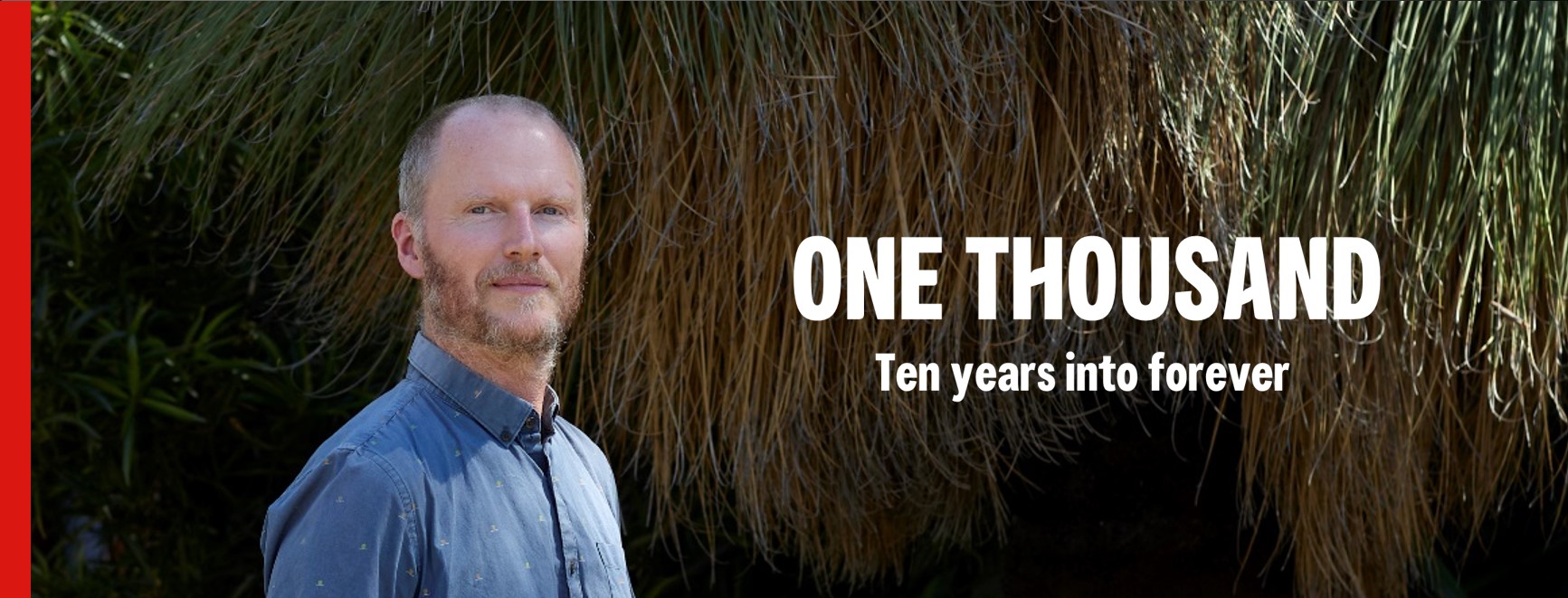
Through his research into bushfire risk, fire management and climate change at the University of Melbourne, Associate Professor Hamish Clarke is reframing how Australia understands fire. Not as the enemy but as something we can prepare for and live alongside.
Fire is physical: a chemical reaction comprising of heat, oxygen and fuel. Fire is ancient: 400 million years old, woven into ecosystems long before humans existed. Fire is global: part of Earth’s climate system. Fire is local: that’s where we face it and feel it. Fire is risky: capable of causing profound devastation. And fire is cultural: carrying different meanings, memories and relationships.
The urge, when faced with something so elemental, is to control it. It’s a fraught endeavour from Hamish’s perspective. ‘There are unquestionably many things we can do to influence fire,’ he says. ‘But there are also hard limits. And the harder we try to control fire, the more we separate ourselves from it, leaving ourselves open to catastrophe.’
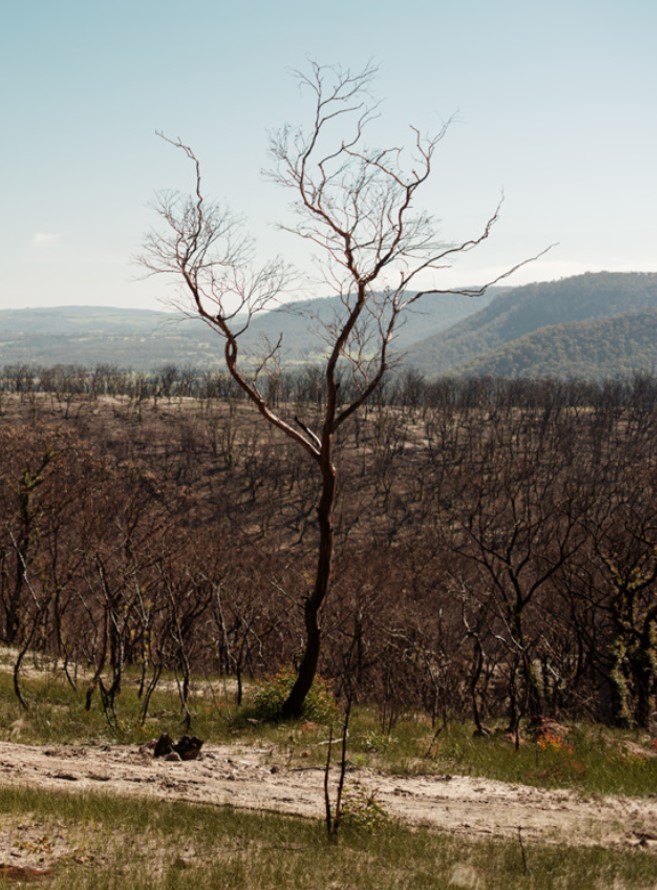
Australia’s Black Summer fires of 2019–2020 made that painfully clear. Around 20 per cent of the country’s temperate forest burned, compared to the usual two to five per cent. The name Black Summer is itself a bit of a misnomer. The fires lasted months, from spring through summer, destroying thousands of homes and costing an estimated $100 billion, according to the royal commission into the disaster. Much like Covid-19 it truly was unprecedented. Yet if we don’t change course, not only will it happen again, it will be worse, warns Hamish.
Hamish's work sits at critical junctures: where science meets society and where prediction meets preparedness.
His journey has been anything but linear: business, biochemistry, international studies, a PhD in climate science, years in the public service. He fell into fire research and took time to build an appreciation for it. But his refusal to stay in one lane taught him something essential. Some problems can’t be solved by science alone.
‘We love solving problems with science,’ he says. ‘But as we know from climate change, you can have a beautiful understanding of the climate system, and it doesn’t translate to political action.’
His unconventional background left him more comfortable with what he calls a pluralist approach: there’s not one right way to do things. Fire doesn’t have a disciplinary home. It works across boundaries: ecology, forestry, climate science, geography, law, social science, the humanities. And increasingly, there’s recognition that some of the most important knowledge about fire has been here all along.
Australia’s Indigenous tradition of working with fire is ancient and diverse. It’s about listening to Country and working with Country. The Clean Energy Regulator reports that enabling improved Indigenous fire management across 24 million hectares of northern Australian savanna has reduced emissions by around 1.2 million tonnes a year since 2012. The approach combines traditional knowledge with modern techniques, resulting in less fire under more extreme conditions.
But Clarke is careful not to romanticise the process.
Relationships between academia and Indigenous communities have been problematic, often extractive. Any meaningful collaboration takes time. It requires listening and acknowledging that caring for Country does not sit neatly within a risk management framework. ‘It’s not just knowledge, a tool, or a product,’ he says. ‘How do we design a healthy system?’
Any system must consider overlapping issues. A Climate Council report highlights at least 6.9 million Australians live in areas with high bushfire risk, largely on the fringes of major cities. Over 5.6 million homes are at risk nationwide, with 90 per cent of homes in some bushland-bordered suburbs built before modern fire safety standards. Australia has warmed by around 1.5°C since 1910, and extreme fire weather is increasing. The number of dangerous fire weather days is rising. The fire season is longer.
And yet, Hamish points out, Australia also has real strengths. A federated, state-based system means there’s rich operational knowledge in every jurisdiction, hard-won over generations. There are strong connections between research and practice, between disciplines, between agencies. Australia is seen internationally as a leader in the fire management space.
Looking ahead, he hopes for greater collective literacy about fire. An understanding that fire is part of the environment and that while it poses risks, those risks can be navigated. Better evidence on what works and what doesn’t.
Data sharing across states, territories, countries. Learning from other hazards. Investing in social infrastructure, not just physical infrastructure. Thinking about recovery in terms of years and decades, not just the first 48 hours.
He hopes Indigenous approaches are no longer treated as add-ons, but as foundational. That there are better relationships, better two-way knowledge transfers. That planning agencies, fire agencies and legal frameworks are pushing in the same direction.
Hamish may be drawn to problems, but he’s also energised by possibility. Fire, for all its devastation, offers a chance to build healthier systems, to work differently, to acknowledge we don’t have all the answers yet. One of his colleagues keeps a picture of a snail as a reminder to go slow. In a field defined by urgency and the pressure to act, that might seem counterintuitive. But for Hamish, it’s essential. ‘It’s countercultural to build things slowly.’
Making space for different voices, different knowledge systems, different ways of understanding what a healthy relationship with fire might look like requires patience. It requires resisting the silver bullet and the urge to control what cannot be controlled.
Backed by Westpac Scholars Trust
The Westpac Research Fellowship empowered Hamish to take his holistic approach to the next level, thinking as broadly as possible about fire. It gave him the freedom to explore creative ways of communicating complex risk, to build better connections between academia, industry and communities, and to work across disciplines in ways that don’t always fit neatly into traditional research frameworks.

One Thousand Magazine
Step inside One Thousand and explore more stories behind the milestone.