It’s all just waves
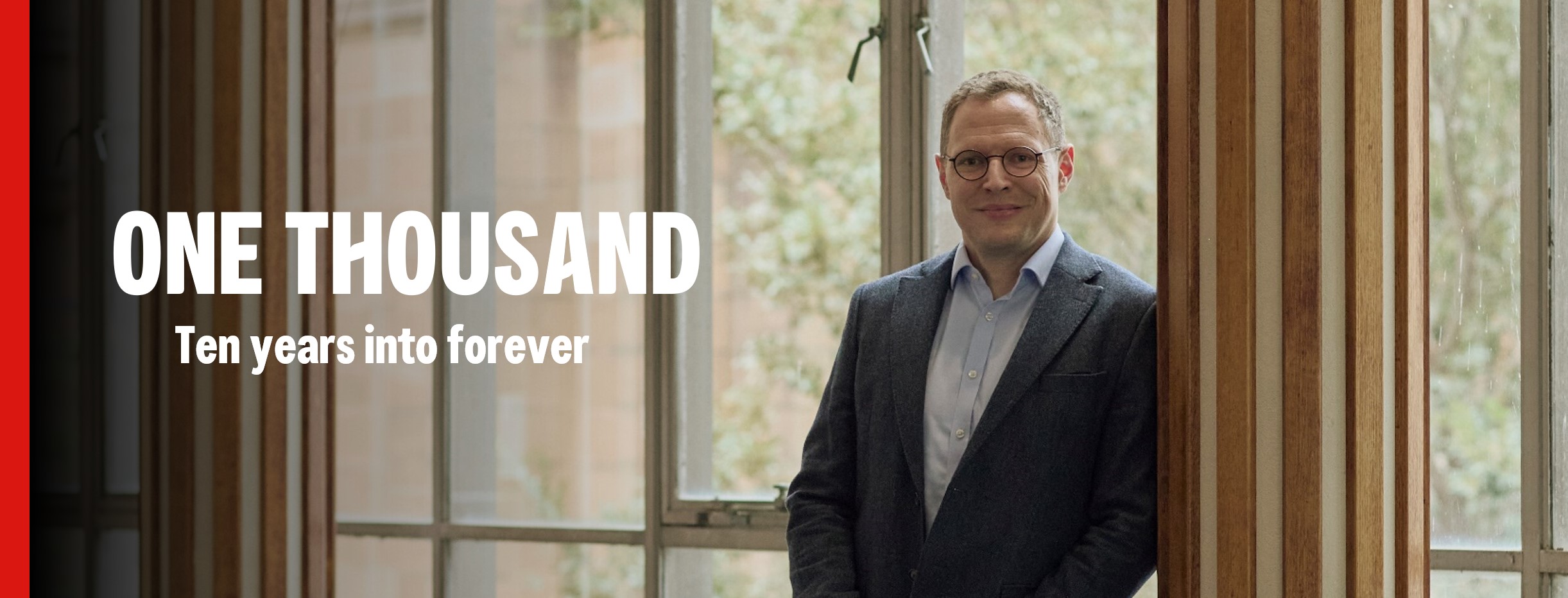
For Professor Ivan Kassal, a theoretical chemist and professor at the University of Sydney, quantum mechanics isn’t magic. It’s hard work and asking questions, until breakthroughs deliver.
Ask Ivan for a dinner party fact about quantum mechanics and he may disappoint you. ‘There’s a lot of mystification around it,’ he says. ‘Some people make it seem like arcane secrets only wizards can unlock.’ But strip away the hype and what’s left is simpler than you’d think: it’s all just waves. Just the physics of really small things behaving in ways that aren’t visible to the naked eye.
His career hasn’t been built on eureka moments. It’s been built on gradual realisations, the kind that start with ‘hmmm, this is weird’ rather than lightning bolts of genius. At the University of Queensland, colleagues working on organic solar cells kept asking him questions about quantum mechanics. The models they were using didn’t add up. ‘I just didn’t get it,’ he recalls. ‘It didn’t make sense.’ So he got curious.
The field was using classical models to explain how charge moved through organic solar cells, particles hopping from one molecule to another like stepping stones. But quantum mechanics doesn’t work that way. At the quantum level, electrons behave as waves, meaning they can spread across multiple molecules simultaneously rather than jumping one at a time. And when Ivan and his collaborators put the wave behaviour back into the models, the predictions improved by orders of magnitude. Sometimes 100 times better. Suddenly, devices that seemed to work for mysterious reasons made sense. It wasn’t mysticism. It was just that people had been using the wrong framework.
The science has the potential to accelerate how we design materials for renewable energy at a moment when efficiency gains matter. The International Renewable Energy Agency (IRENA) reports in 2024, renewables accounted for 92.5 per cent of global power capacity expansion. Solar costs have fallen 90 per cent since 2010. But global emissions still hit a record 37.4 gigatonnes in 2023.
Sitting between disciplines has shaped Ivan’s work. He got his PhD in chemical physics, neither chemistry nor physics, but somewhere in between. His physics colleagues think he’s a chemist. His chemistry colleagues think he’s a physicist. ‘It’s not a compliment either way,’ he says. It’s forced him to engage with other areas of expertise, to learn other people’s languages until he understands what they’re actually trying to solve. ‘The discomfort is absolutely necessary,’ he says. ‘You have to get past it.’
That willingness to sit in discomfort has enabled some of his most significant work.
In 2025, Ivan and his collaborators simulated a chemical reaction on a quantum computer for the first time. Normally, predicting how molecules behave requires enormous computing power. Compared to the best previous method on a quantum computer, Ivan’s approach is around a million times more efficient, meaning it could eventually help scientists design new drugs or solar materials without endless trial and error in the lab.
It started over coffee at a cafe on the University of Sydney campus. A colleague mentioned they had a trapped ion quantum computer – a device that traps individual ions (charged atoms) and holds them in place. They were looking for things to do with it. Ivan had an idea: the ions in the quantum computer jiggle. Molecules jiggle. Maybe they could use one to simulate the other.
The team didn’t realise at first how transformative the approach would be. Normally, simulating a vibrating molecule on a quantum computer requires tens of qubits, the basic unit of quantum computing, which are extremely difficult and expensive to produce. By using the quantum computer’s own natural vibrations to represent molecular vibrations, they bypassed that entirely.
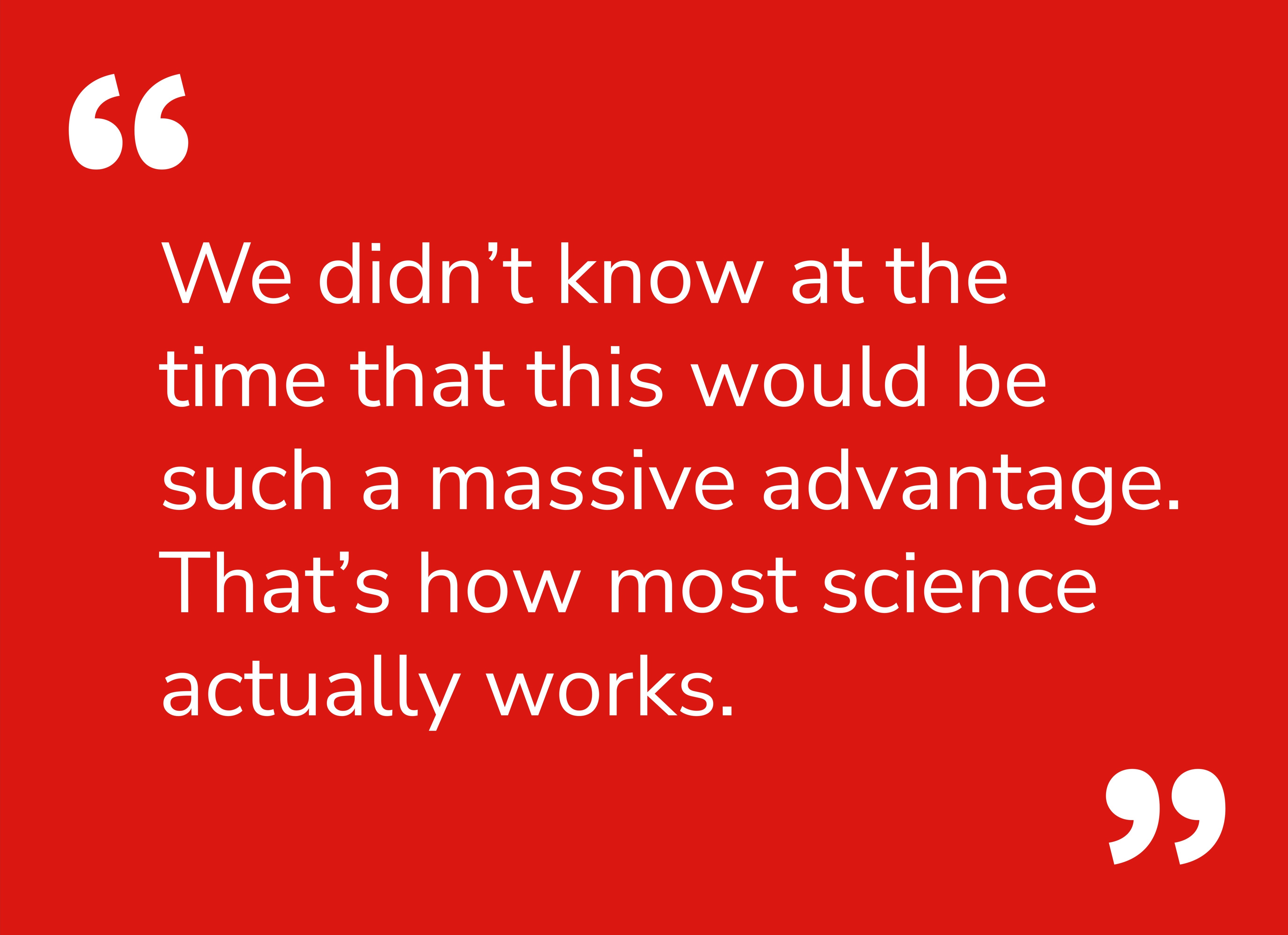
‘We didn’t know at the time that this would be such a massive advantage,’ Ivan says. But the implications are significant. Right now, if you want to design a new drug or a better solar cell material, it’s trial and error.
You make something in the lab. It doesn’t work. You try again. Maybe 99.99 per cent of attempts fail. Ivan’s work is about changing that. It’s about simulating the full journey of a molecular reaction, not just the start and end points, but everything in between. Understanding how light interacts with molecules. How bonds break and form. How energy moves.
This matters for solar energy cells. It matters for photodynamic therapy, where molecules absorb light to treat disease. It even matters for sunscreen, which dissipates light energy rather than letting it damage DNA. ‘There’s a lot of trial and error,’ Ivan says. Accelerating that would really improve people’s lives.
He’s optimistic about what becomes possible when quantum simulation matures, not because technology solves everything, but because ‘we’ve handled change reasonably well for the last 400 years since the Enlightenment.’ New drugs will come out. Better materials. Faster discovery. People will take it for granted. ‘Ozempic was a miracle for a month,’ he says. ‘Then it was just another option.’
But for now, he rejects the excessive hype that surrounds quantum computing. ‘Advanced technology can seem mysterious,’ he says, ‘but that’s where scientists should step in to explain it.’ Strip it back and it’s simple: waves, hard work and asking the right questions.
Backed by Westpac Scholars Trust
The Westpac Research Fellowship gave Ivan the freedom to pursue high-risk, boundary-crossing research at a pivotal career moment. It provided salary support that helped him secure a permanent position at the University of Sydney in 2017, but just as importantly, it offered a badge of recognition and a network beyond his discipline. Preparing for the fellowship interview forced him to translate quantum mechanics for non-scientists, a skill that has shaped how he communicates the importance of his work ever since. The continuing connection, including opportunities to serve on selection panels, has deepened his thinking about leadership, collaboration and what actually matters when identifying talent.
One Thousand Magazine
Step inside One Thousand and explore more stories behind the milestone.