It is possible to end homelessness; it starts with believing we can
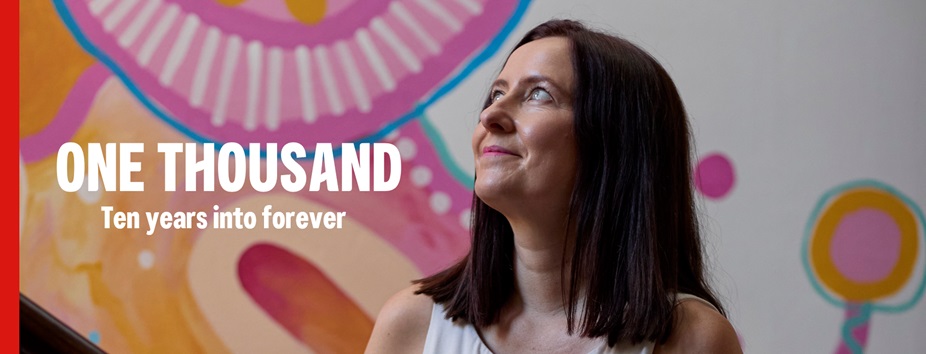
For two decades, Carla Raynes watched young people experiencing homelessness fall through the same gaps in the system. She knew that without stable housing, nothing else was possible. So alongside her founding team she built the Cocoon.
It’s a common metaphor: your business is your baby. But for Carla Raynes, the metaphor played out in real time. She gave birth to her son Ted at the same time as founding Bridge It – a charity providing homes to young women and gender diverse people who have experienced the out-of-home care system or homelessness. The teething happened side by side, as did the growth. ‘It’s been amazing yet sometimes exhausting,’ says Carla. ‘So much of Bridge It has mimicked the experience of raising Ted.’
Carla has spent nearly two decades in the industry, working across crisis accommodation, youth refuges and council housing in both the UK and Australia. She’s supported inner-city young people, street-based sex workers and people leaving prison. She knows what works and what doesn’t. What she’s learned, again and again, is this: ‘you cannot work with people on their mental health or drug and alcohol addictions, you can’t support people to exit sex work or get jobs or do anything, unless they have a home.’
The scale of youth homelessness in Australia is sobering. In 2024–25, specialist homelessness services assisted around 289,000 clients. More than a quarter, or 78,800, were under 18. Around one in three young people leaving out-of-home care experience homelessness within their first year after leaving. And of those who do seek help, 69 per cent are returning clients, not new ones. Housing affordability stress was a reason for seeking assistance for 36 per cent of clients (average rent across the country increased by 5.5 per cent between 2024 and 2025).
Working across different Australian services, Carla began to see the gaps.
Crisis accommodation and youth refuges only offered six to eight weeks of support – not enough time to achieve decent, long-term outcomes. On the other end of the spectrum, education-first models require young people to be ready for or engaged in study. But the young people Carla was seeing, cycling in and out of short-term accommodation, didn’t always meet that criteria. And then there was transitional housing: an apartment in the community but with little support and an expectation of complete independence. ‘For many young people, they can’t handle that,’ she says. ‘There was nothing in the middle,’ Carla says. ‘That’s the missing piece.’
So she built The Cocoon, a home in Melbourne for young women and gender-diverse people aged 16 to 21 that offers 12 to 18 months of semi-supported housing, alongside her founding team and Board. ‘The team is there during the week, but the young people live independently on the evenings and weekends. We have seen how powerful that is for building skills around independent living.’
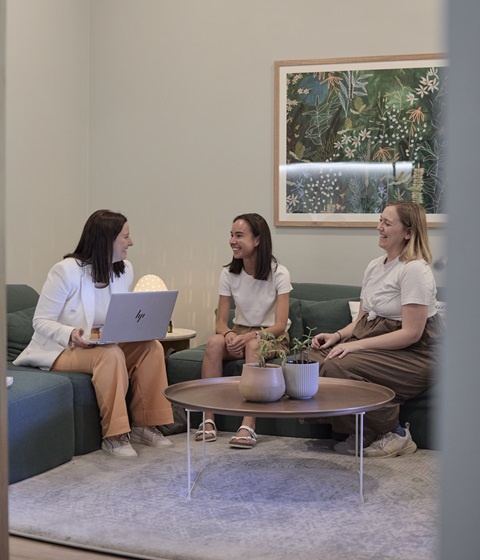
At the Cocoon, young people finish Year 12. Get driving licences. Start university. Buy their first cars. Form positive relationships. After they leave, they move in with partners. Take overseas holidays. Work full time. ‘We are so proud of our residents and their achievements, many of which felt out of reach for them when they arrived at the Cocoon,’ Carla says. ‘It’s reflective of the power of stable, supportive housing. Reflective of the mindset shift.’
Carla refuses the label ‘homeless’. ‘It reduces people down to one thing… It’s really patronising.’ At Bridge It, they talk about ‘people impacted by homelessness’, rather than people who are homeless. The focus is on potential and what’s possible when you invest in people.
Becoming a mother changed how Carla saw the work. ‘When you study social work and work in the sector for a really long time, you start to absorb the status quo. A certain rigidity around rules, policies and procedures.’ But now, Carla often comes back to a single question: ‘What would we do if they were our child?’ That’s become a mantra at the Cocoon.
Carla is in good company. She meets regularly with the CEOs from Kids Under Cover in Victoria and Stepping Stone House in Sydney to share learnings, strategies and aspirations. ‘We love the expression ‘radical collaboration’,’ Carla says. ‘We can’t end youth homelessness unless we work together.’
She’s also learned to collaborate differently. Not just with the homelessness sector, but with big business. ‘Some of the homelessness sector and government have a deficit mindset. We don’t have enough money. The crisis is too big. Everything’s really hard. All of that is true. But the way business thinks is: we’re going to conquer this. We’re going to make this happen. There’s a lot more courageousness in the mindset of business people. They make me more courageous. They make everything feel like it’s possible.’
Ultimately, Carla wants to overhaul the entire system. She wants to achieve functional zero, where youth homelessness is rare, brief and non-recurring. She estimates it would require around 1,000 Cocoons across Australia. Right now, there’s one with a second on the way. By 2030, she wants four to five in Victoria. Ultimately she would like any young person without a safe home to have access to a Cocoon without a waiting list. ‘Families will always break down. Things will always happen. But when they do, we want to be there to help.’
Backed by Westpac Scholars Trust
The Westpac Social Change Fellowship provided Carla with a $50,000 investment in her professional development. The fellowship also allowed her to visit services in the UK, and undergo mindset training, which she then funded for her entire team. ‘I was stretched so thin,’ she says. ‘Trying to be an excellent wife, an excellent CEO, and not nailing either. I’m a changed person from this experience.’
One Thousand Magazine
Step inside One Thousand and explore more stories behind the milestone.