Finding the middle ground
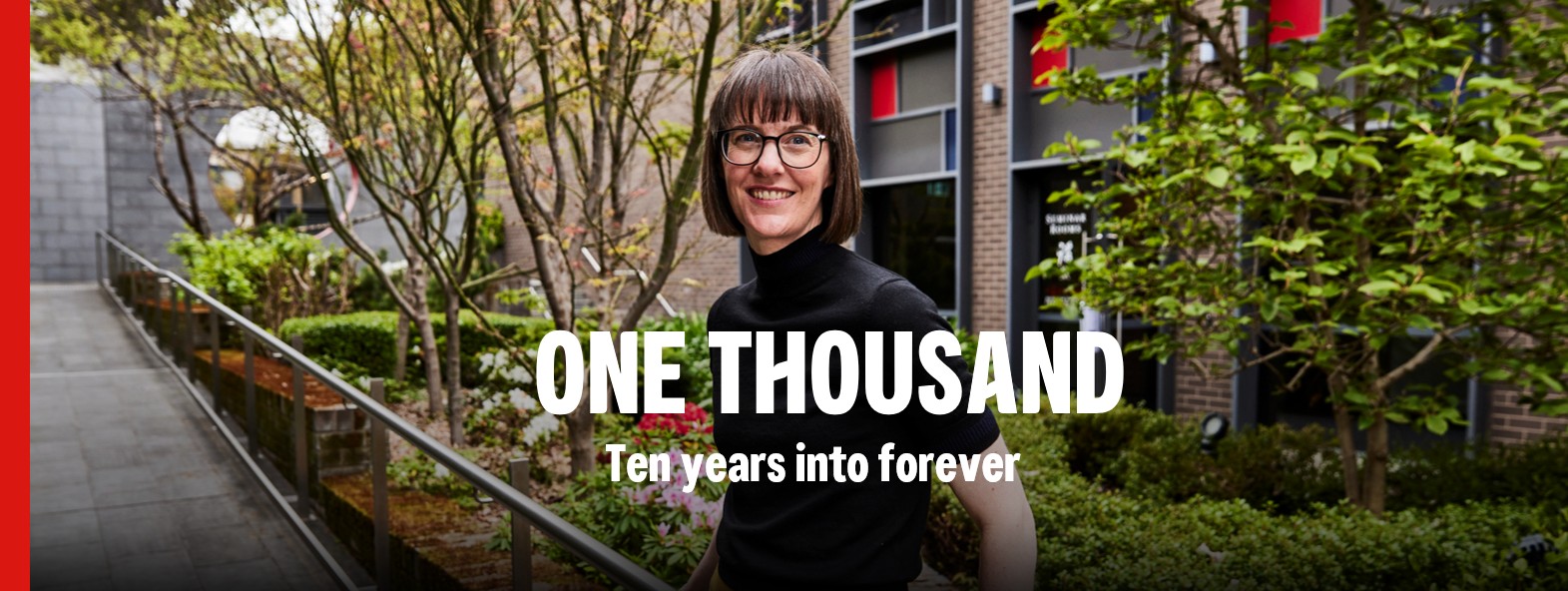
Associate Professor Amy King is reframing how Australia understands Asia by building the expertise and confidence necessary to work across differences.
In 2013, Amy King returned to Australia after five years studying at Oxford. She arrived at the Australian National University (ANU) eager to teach students, many of them current government, military and foreign affairs officials, about China. What immediately struck her was the divide between disciplines. Her colleagues in Chinese studies, historians, economists, literature scholars, possessed an extraordinary depth of knowledge about China but weren’t connected to the policy and strategic debates shaping
Australia’s future.
Over in the international relations and security studies programs, where future policy makers were being trained, scholars described China in abstract terms: a rising power, a strategic challenge, an urgent but unknowable force. The two worlds barely spoke to each other. Deep knowledge wasn’t flowing to the people who needed it most.
‘China was viewed as this unknowable black box that we had to do something about,’ she says. According to Amy, the dominant narrative that China sat outside the post-World War Two international order and is now trying to undermine or overturn it, is historically and politically inaccurate. China has been involved in shaping the institutions, including the World Bank and the International Monetary Fund, that defined the international order from the start.
‘The post-World War Two international order has never been fixed. It has always been shaped by countries working together, even across profound differences. Understanding that history reframes the present. It helps identify where interests might align today, on issues such as climate change, pandemic responses and critical minerals, and where they genuinely diverge.’
However there are significant tensions between that aspiration and Australia’s current reality. The Department of Foreign Affairs and Trade reports that Australia’s exports to China reached a record $219 billion in 2023, representing 32.2 per cent of total exports. Yet trust in China to act responsibly in the world has plummeted from 52 per cent in 2018 to just 17 per cent in 2024, according to a Lowy Institute poll. 53 per cent of Australians now see China as more of a security threat than an economic partner.
Meanwhile, reports including Australia’s China Knowledge Capability review identify ‘critical gaps and serious signs of decline’ in the expertise needed to navigate the relationship. The numbers tell a story of deepening economic interdependence colliding with eroding trust and capability.
Amy points to several barriers preventing Australia from building the relationships and regional expertise it needs. There’s the persistent othering of China and the wider region, particularly within Australia’s political and government class, which has historically been less diverse than the business or cultural sectors. There’s also the mental leap required when, traditionally, powerful allies such as Britain and the US have been culturally and racially similar.
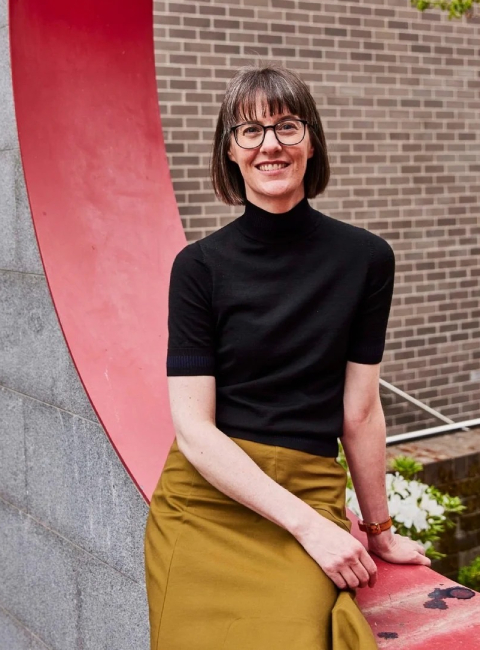
‘The familiar is very tempting,’ Amy says, ‘but I’m not sure leaning on the familiar will necessarily solve the challenges that we actually need to solve.’
Australia is a diverse, multicultural country.
Amy believes Australia has a unique opportunity to draw on the knowledge, lived experience and language skills of migrant communities to deepen our understanding of the Asia-Pacific region. The goal isn’t to erase differences, but to build deeper understanding so countries across the Asia-Pacific, such as China, Japan and Indonesia, become as familiar to Australians as other parts of the world.
‘If Australians consumed news from the [Asia-Pacific] region daily, understood the politics and histories, knew the leaders and cultural currents, the country could navigate with genuine confidence,’ says Amy. ‘It could identify precisely where interests align and where they don’t, without assumptions.’
The risk Amy sees isn’t necessarily the headline threat of military conflict over Taiwan, though 59 per cent of Australians rate it as critical. It’s the slower, structural challenges. Economic decoupling that undermines the trade relationships Australia relies on to fund schools, hospitals and infrastructure. The inability to coordinate pandemic responses or develop vaccines without functioning, multilateral frameworks.
Climate breakdown that demands regional cooperation on emissions and adaptation. The danger is hyper-fixation on one flashpoint while the complex middle ground gets ignored.
Amy’s own work has evolved alongside this thinking. Impact, she’s learned, compounds when you work as a team. She’s built a thriving community of early-career researchers focused on China and Japan. She’s mentored PhD students. She’s championed gender equality in international relations and security, developing practical strategies across institutions including the University of South Australia, Oxford and ANU.
‘We can do more together,’ she says. ‘The impact you can have is infinitely greater when you’re working as part of a team.’
Amy hopes for a future where China and the region are simply part of the daily news cycle. Where it’s unremarkable for Australians to know what’s happening in Beijing, Tokyo or Jakarta. Not through state-controlled media, but through Australian journalists on the ground, flourishing university departments, genuine familiarisation. Where working confidently with countries across the region to solve complex global challenges is just par for the course.
‘So much of the Australian debate sits at the extremes. China is the enemy. Or there’s no problem at all and we’re being too mean. Neither story is true, and neither is useful.’
Amy’s work is about collapsing distance. Not to erase difference, but to make it navigable. To replace defensiveness with confidence. To build the expertise, the relationships, the institutional culture that allows Australia to work across difference with countries in the region.
Backed by Westpac Scholars Trust
The Westpac Research Fellowship has been transformative for Amy’s work in ways that extend beyond traditional research funding. The combination of leadership training and development alongside research support enabled her to work at scale — building teams, leading cultural change, and developing a thriving community of early-career researchers. The fellowship also connected her to a network of inspiring scholars, including Asian exchange fellows who have gone on to careers in government and the private sector.
One Thousand Magazine
Step inside One Thousand and explore more stories behind the milestone.