Engineering at the interface
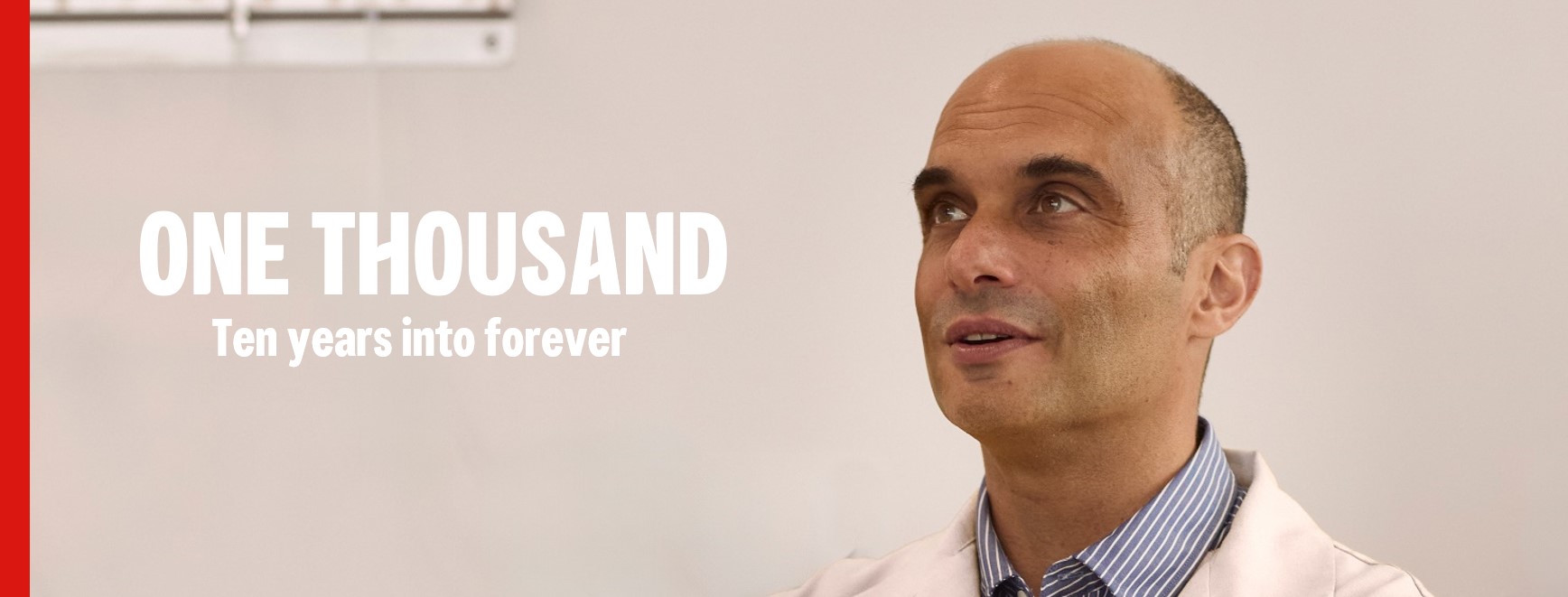
Remember disinfecting your hands after touching a door handle during Covid-19? The constant worry that an invisible threat might be lurking on every surface you touched? Professor Antonio Tricoli’s research just might find the solution to one of medicine’s oldest problems: how to stop dangerous pathogens, that can cause significant harm, from spreading.
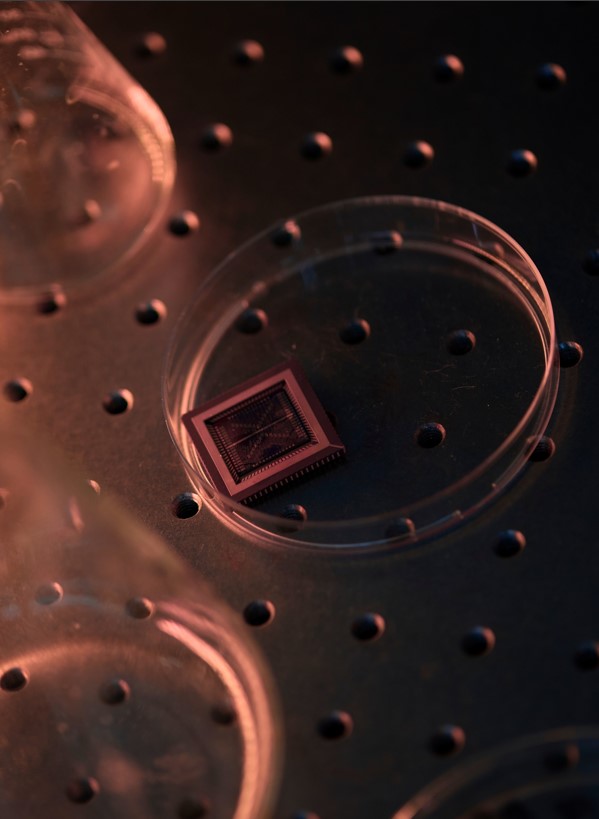
It began with an accidental discovery. Zurich. 2006. Antonio was developing nanostructures (extremely small materials or structures measuring between 1 and 100 nanometers) for electronics when he noticed something strange. When liquid touched these surfaces, it didn't bead or pool like water on a raincoat. Instead, it spread out in less than 0.8 seconds. In scientific terms this is called superhydrophilicity and it refers to a surface’s extreme attraction to water. The discovery raised a question: if nanostructures could make surfaces attract water so aggressively, could they also do the opposite and repel water?
Pathogens (germs) such as viruses or bacteria need moisture to survive. Their spread onto another surface is usually facilitated through a droplet of water or a wet surface. Antonio, a Professor of Materials Science at the University of Sydney, hypothesised that if you could engineer a surface to repel water at the molecular level, that film may never form and the pathogens wouldn’t be able to be transferred to it. Instead of killing pathogens with chemi‑ cals they might develop resistance to, could he create conditions that are so inhospitable the pathogen never has a chance to take hold?
Antonio's love of science is born of curiosity.
‘I’m motivated by what I don’t know.’ Antonio says. This drive serves him well across the myriad of spaces he inhabits through his work. Moving between nanotechnology, public health, renewable energy and medicine means perpetually entering rooms where others know more than him. Engineers, he’s found, are direct and solution-focused. Other disciplines move more slowly, letting ideas emerge through conversation. It can be challenging, but leaving the silo generates new ideas and this curiosity without ego is what he teaches his PhD students: ‘We should never be too proud of what we already know. We are here to learn.’
According to Antonio, going broad while also going deep can be exhausting. The learning curve when it comes to translating discovery into deployment can also have its challenges, as Antonio found when developing a sensor to measure acetone in breath, an early indicator of Type 1 diabetes. He imagined children at school, whistling into a device that could detect danger before it escalated. A company approached him and asked what the shelf life of the product would be. ‘When I told them four or five years, they asked me to make them work for less time as it was better for their business model.’
It’s a moment that crystallises the friction between research and translation.
Only one in 5,000 to 10,000 drug candidates entering preclinical testing ever receives regulatory approval. The average journey from discovery to market takes 10 to 15 years. Somewhere in that long, expensive process, the question shifts from ‘does this help?’ to ‘how can the technology be financially sustainable?’
Antonio’s antimicrobial surfaces sidestep one part of that problem by removing the need for new antibiotics. Unlike antibiotics, which bacteria can learn to resist, these sur‑ faces don’t select for stronger strains. They just prevent pathogens from sticking at all. It’s a passive form of protection — no chemicals bacteria can adapt to, no arms race of antibiotic resistance, just physics working at the nanoscale.
According to a systematic analysis published in The Lancet, bacterial antimicrobial resistance directly caused 1.27 million deaths globally in 2019. WHO reports that in high-income countries, seven in every 100 patients in acute-care hospitals acquire at least one healthcare-associated infection. The surfaces Antonio designs could remove that risk entirely.
In the future, Antonio hopes we’ll walk into a doctor’s waiting room without fear of catching something.
The surfaces no longer harbour threat. Superbugs won’t be evolving faster than we can fight them, because the environments that select for resistance will have changed. Early detection sensors will track emerging viruses, giving societies time to prepare rather than react.
In science, rejection is constant – grants denied, papers rejected, translation delayed. ‘You have to have a strong drive and resilience to keep going.’ The Westpac Research Fellowship connected him with people outside his field, showed him how science is seen from the outside and reminding him why it matters.
Young scientists, he says, need that support. The work is hard. The path is uncertain. But the questions remain irresistible. And in the end, Antonio tells his PhD students, ‘you have an opportunity to explore your curiosity in something that you like. So you have to own it.’
Backed by Westpac Scholars Trust
The Westpac Research Fellowship provided Antonio with crucial support to continue his research. Beyond funding, it gave him the confidence to pursue high-risk, multidisciplinary research spanning nanotechnology, public health and renewable energy. The fellowship connected him with people outside his field, strengthening his ability to translate laboratory discoveries into real-world applications.
One Thousand Magazine
Step inside One Thousand and explore more stories behind the milestone.