Building confidence, not just platforms
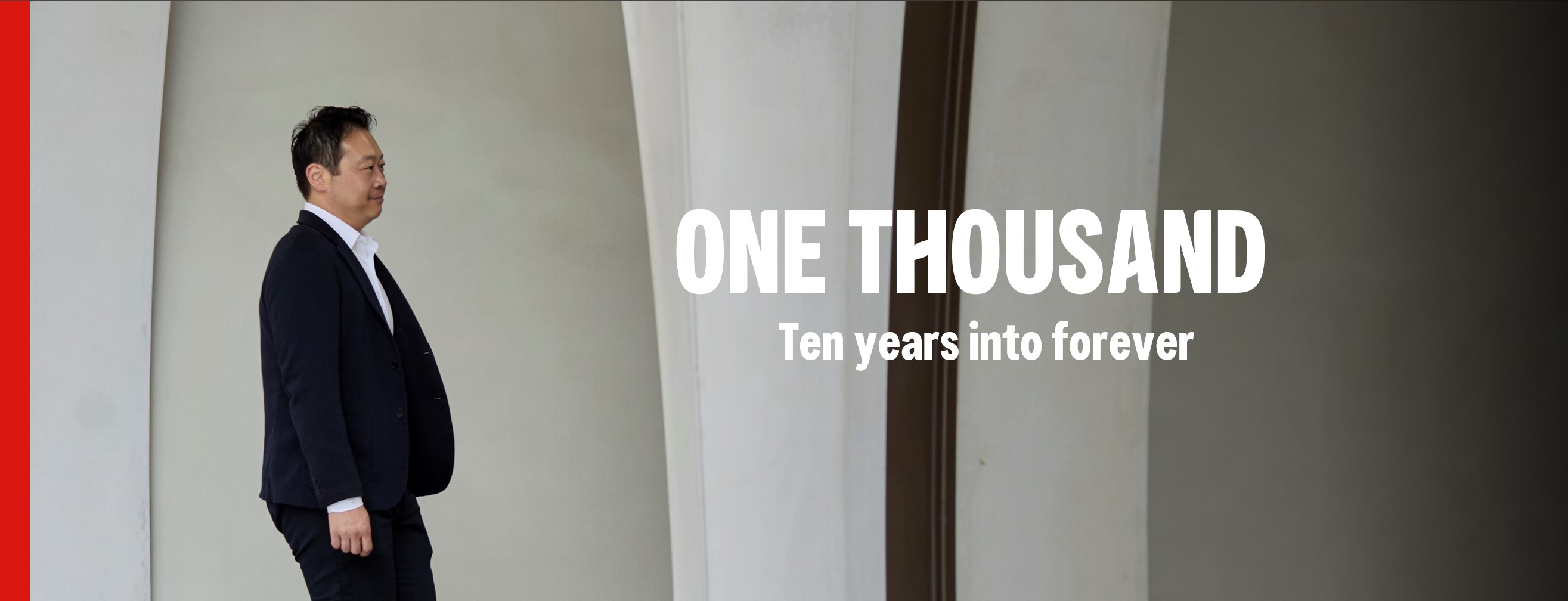
Danny Hui is redesigning disability care coordination. Not by adding more services or louder advocacy, but by listening deeply and building technology that shifts power back to families.
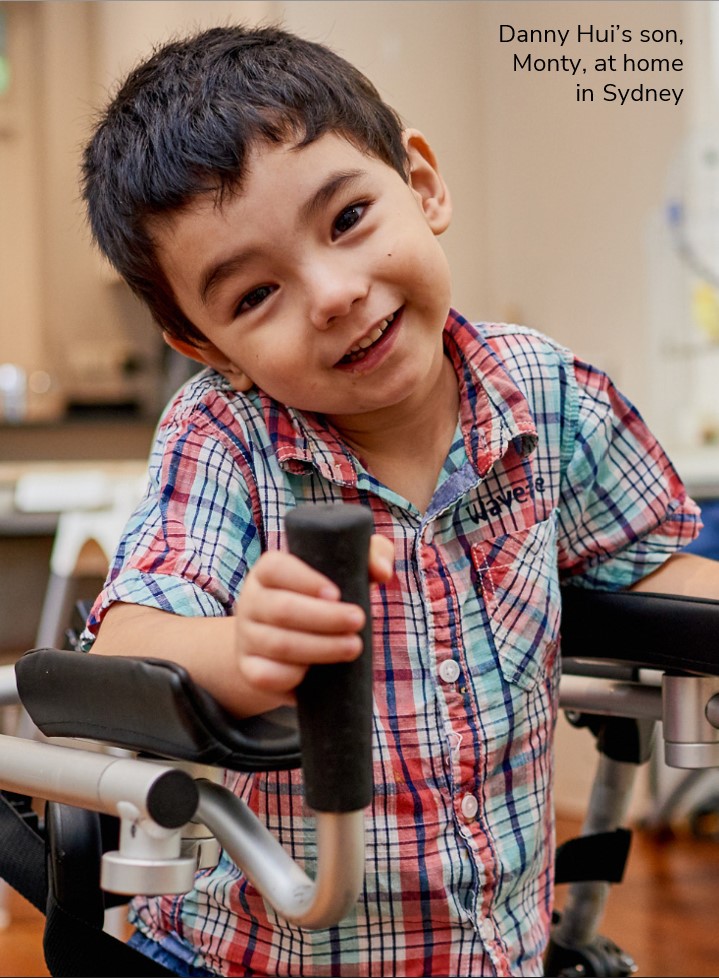
In 2013, Danny Hui sat in the speech therapy clinic with his youngest son Monty and started counting. Specialists from the hospital system. Therapists from outside. Educa‑ tors. Support workers. It didn’t take long to count to 40; the number of people involved in his son’s care.
‘Then it really hits you,’ Danny says, ‘the scale of the problem.’
For most families, it starts with the unexpected. Results from a routine test or a sudden accident. For Monty, who lives with a rare disease, it was newborn hearing loss. Early interventions focused on speech, hearing and language. Weekly sessions became routine. But as Monty’s physical needs developed, requiring physiotherapy and occupational therapy alongside speech therapy, a pat‑ tern emerged. Or rather, a lack thereof.
‘We were going to these weekly speech and language sessions,’ Danny recalls, ‘and I realised there’d been no conversation about how he could actually be in the room to receive the therapy. There was no adequate seating for him, no supports for him to be physically comfortable. We would just go into these sessions week to week and do the same thing over and over again. We’d told them we had additional support needs but no one had joined the dots.’
The answer, Danny soon learned, was that the coordination – the work of making 40 different people communicate effectively around one child’s care – fell entirely to the family.
‘You feel that demand on yourself as a person and as a parent,’ Danny says. ‘You’re trying to put in place interventions early. You’re trying to get as much done as possible because they’re young. Every decision feels urgent, like the whole thing is a race.’
According to a 2023 report from the National Disability Service, fragmented health and disability services disproportionately impact 5.5 million Australians living with a disability. Over 30 per cent of adults with disability report high psychological distress. Many carers have to reduce work hours or leave employment entirely. Meanwhile, 82 per cent of disability service providers report they cannot fill service requests due to shortages. The infrastructure is expanding but the gaps remain.
‘I was a person from outside of this world,’ says Danny, whose back‑ ground is in engineering and disaster management. ‘I didn’t know anything about disability or support services or even hospitals before Monty was born. All of that was shocking to me.’
That realisation, that this wasn’t just his family’s experience but a shared pattern across thousands of families, became the foundation for sameview, a platform designed to help families, clinicians and carers collaborate more effectively around shared goals. Sameview currently supports a community of over 16,000 users.
‘Our story is just one,’ he says. ‘As soon as you meet people, you discover just how diverse this issue is.’
So when Danny and his team began developing sameview, they started with uncertainty. ‘We’d heard enough to try, but the most important thing is to go out there and talk to people, and turn everything we hear into useful services.’
The foundation of sameview is shaped by choice, independence and respect for individuality. ‘Each person is beautifully individual,’ Danny says. ‘If that’s your guiding principle, it really shapes what you can and can’t do.’ As a result, sameview doesn’t define people by categories, it doesn’t require families to share more than they’re comfortable with and crucially, it doesn’t advertise. ‘We have to be cautious, because in the sector there’s a lot of solutions that mask commercial bias. That often works against the best outcomes of the individual.’
Even sameview’s platform had to be designed differently. Danny recalls asking families if they wanted to see progress charts and percentage indicators. The response surprised him. ‘Some families are working towards goals that may never be achieved, but the most important thing is that they’re working towards it. They didn’t want to see charts, graphs and metrics, they just wanted the platform to tell the story of how they’re going.’
Danny highlights that among families using sameview, 85 per cent report saving time every week in care coordination tasks, an average of two hours or more. But more telling: 73 per cent felt more confident managing care and support, 75 per cent felt more included in care decisions and 62 per cent reported having more space for other important things in life, for work, education, relationships.
‘The workload doesn’t disappear,’ he says. ‘That’s just what it is. But that confidence changes everything.’
He recalls a turning point early on with Monty. ‘When he was really young, we wanted to go on a family holiday and we felt like we couldn’t. It was this moment of: couldn’t we just say to our therapist, our goal at the moment is to work out how we can go on a holiday? There was nothing stopping us from doing that except our own confidence and capacity. That mindset change was huge.’
Alongside sameview, Danny’s commitment to the community has seen him work as Deputy Chair of Children and Young People with Disability Australia, mentor emerging social entrepreneurs and deliberately lift the voices of young people with disability.
His own life has grown more complex since those early days. He now has three children with disabilities, each with different support needs and different teams. Aged 17, 15 and 13, they are learning to advocate for themselves, taking on more of their own care coordination in age-appropriate ways. The 40-person care teams are still there. But confidence, as Danny knows, changes everything. And confidence begins with someone listening, with choice being real and with power shifting back to the person.
Backed by Westpac Scholars Trust
As a 2020 Westpac Social Change Fellow and founder of sameview, Danny has been able to develop technology-enabled solutions while pursuing systemic change through board work and mentoring. The fellowship’s flexibility allowed him to grow his impact across multiple avenues, from individual families to national policy, recognising that leadership doesn’t have to be singular.
One Thousand Magazine
Step inside One Thousand and explore more stories behind the milestone.